Greece is bracing for a 24-hour normal strike on Thursday known as by nation’s commerce union federations, in protest to the federal government’s labor invoice.
The strike known as by the General Confederation of Greek Workers (GSEE) and the Civil Servants’ Confederation (ADEDY) will trigger main disruption in public transport, public providers and the media.

“The Confederation has from the outset expressed its sturdy disagreement with the controversial provisions of the labor invoice, which might deal an enormous blow to the labor market, collective bargaining and society, ” GSEE stated in an announcement.
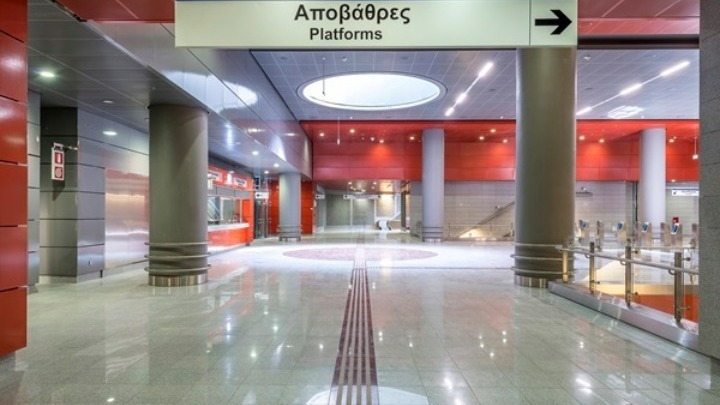
On June 10, there will likely be no metro, electrical railway (HSAP), or trolley and tram providers, whereas the Hellenic Railways Group’s (OSE) trains and people of the Suburban Railway (‘Proastiakos’) can even keep of their depos all through the day.
Solely buses will function on Thursday, however solely from 09:00 to 21:00, as staff there are staging a piece stoppage initially and finish of their shifts.
Transportation sector staff will participate within the protest rally scheduled for 11:00 at Klafthmonos Sq. in central Athens on Thursday.
The ships in Greece are anticipated to stay moored, because the 13 seafaring unions of the Panhellenic Maritime Federation can even take part within the strike.
“The legislative initiatives introduced by the federal government for the abolition of the eight-hour working day and the additional discount of staff’ rights require the dynamic and coordinated response of all commerce unions,” the Federation stated in an announcement.
All media (print, radio, web), in the private and non-private sector, are additionally anticipated to strike.
In Could, Greece unveiled on Wednesday a new labor bill which the government of Kyriakos Mitsotakis says it will increase competitiveness by extra versatile working hours.
The invoice has been criticized by the left-wing opposition and unions who concern the adjustments will undermine employee rights.
Labor and Social Affairs Minister Kostis Hatzidakis offered the draft laws, titled “For the Safety of Labor”, and stated that it was according to European finest practices and groundbreaking labor laws.
“The labor regulation is antiquated,” Hatzidakis informed a information convention. “The core of the invoice goes again to 1982. In 1982 the Web, not to mention teleworking, was a distant dream.”
Strike in opposition to versatile working hours
Probably the most contentious half introduces flexibility to the eight-hour workday by permitting staff to work as much as 10 hours on at some point and fewer on one other, or take day off.
The invoice, Hatzidakis claims, makes it unlawful to dismiss an worker for refusing versatile working hours.
Mitsotakis stated the invoice was supposed to guard staff. “It strengthens their rights…, corrects injustices of the previous. Briefly, it provides energy to the worker,” he tweeted.
The left-wing Syriza opposition has criticized the invoice, saying it restricts worker rights at a time when staff threat extra job losses because of the coronavirus pandemic.
Syriza leader and former prime minister Alexis Tsipras accused the federal government of shifting in opposition to a worldwide development to enhance staff’ rights.
“(It) is attempting to make use of the pandemic as a chance to impose probably the most anti-popular (measure) a Greek authorities has ever introduced in opposition to the world of labor: the abolition of the eight-hour working day.”