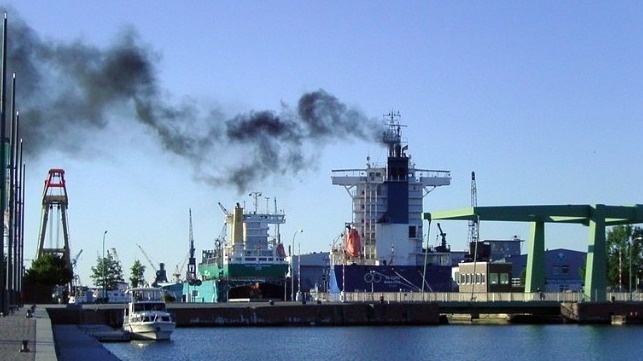
The California Air Sources Board right now accepted a brand new regulation designed to additional scale back air pollution from ocean-going vessels whereas docked at California’s busiest ports. Among the many steps they’re enacting is extending the present guidelines to extra circumstances of ships. They estimated the overall value of implementing these laws at $2.23 billion.
In accordance with the California Air Sources Board (CARB), right now’s motion builds on progress achieved by the groundbreaking At-Berth Regulation adopted in 2007. Their research present an 80 p.c discount in dangerous emissions from greater than 13,000 vessel visits since 2014. The up to date rule provides new vessel classes, particularly focusing on most tankers, requiring vessels to regulate air pollution after they run auxiliary engines or auxiliary boilers whereas docked for energy and electrical energy.
“This rule clamps down on air air pollution from the biggest ships whereas they’re docked in California ports, and there are a number of methods terminals, ports, ship homeowners and operators can comply,” mentioned CARB Chair Mary D. Nichols. “The motion CARB took right now will ship cleaner air and public well being advantages to all those that stay in port-adjacent communities all through California.”
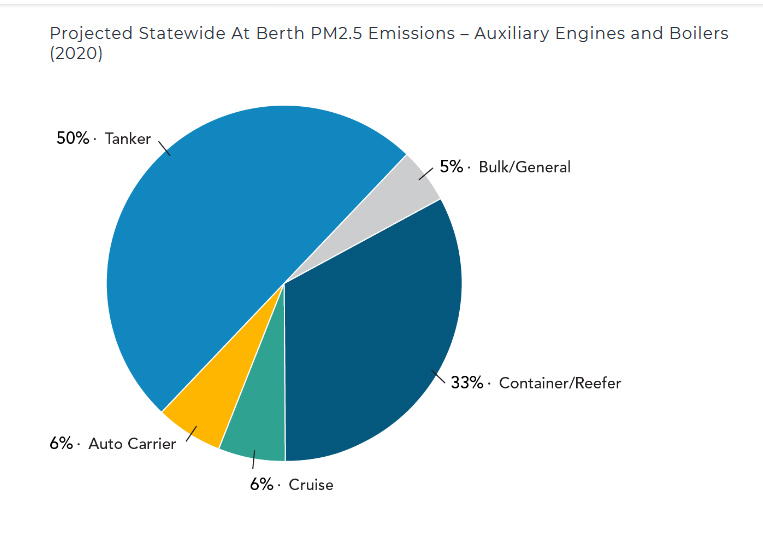
Vessels coated beneath the present regulation embody container ships, reefers and cruise ships. The up to date regulation provides auto carriers and tankers, two classes that produce 56 p.c of all high quality particulate air pollution (PM 2.5) from ocean-going vessels at berth in California ports based on the board.
As soon as absolutely carried out, CARB estimates the up to date regulation will ship a 90 p.c discount in air pollution from an anticipated extra 2,300 vessel visits per yr, and end in a 55 p.c discount in potential most cancers danger for communities close to the Ports of Los Angeles, Lengthy Seashore, and Richmond.
The present regulation stays in power by means of 2022 with the up to date regulation beginning in 2023 when container, reefer and cruise vessels – already included beneath the present rule – will transition to the brand new regulation. Auto carriers might want to comply beginning in 2025. Tankers docking on the Port of Los Angeles and the Port of Lengthy Seashore should additionally comply beginning in 2025, whereas tankers in Northern California have till 2027.
The rule requires that each vessel coming right into a regulated California port both use shore energy or a CARB-approved management expertise to scale back dangerous emissions. These embody diesel particulate matter, high quality particulate matter (PM2.5) oxides of nitrogen (NOx, a precursor to smog), reactive natural gases (ROG, one other precursor to smog), greenhouse gases, and oxides of sulfur (SOx). Among the many examples of an alternative choice to shore energy the board cited capture-and-control expertise that employs a “bonnet” to cowl a ship’s exhaust stacks, each containing and treating dangerous emissions.
Ship homeowners, terminal and port operators that want extra time to conform could petition the board to make use of various technique of reaching equal or better emissions reductions in port-adjacent communities. An instance can be buying zero-emission heavy-duty vehicles for port use. Proposed tasks would require intensive neighborhood overview in addition to CARB approval.
Ships or terminals which are unable to attach a vessel to an emissions management expertise (on account of gear failure, port congestion, and so forth.) throughout a go to might be able to adjust to the regulation by requesting a Terminal or Vessel Incident Occasion, a restricted variety of that are granted to every regulated terminal operator and vessel fleet per yr.
In restricted circumstances, port and shipping entities which are unable to conform will, if their software is accepted by CARB, even have a possibility to pay right into a remediation fund. These funds should be used for environmental tasks that may profit port-adjacent neighborhoods.
The up to date regulation additionally consists of an interim analysis, to be performed in 2022, to judge progress and establish any issues regarding implementation or compliance with the up to date At-Berth Regulation.